Short answer
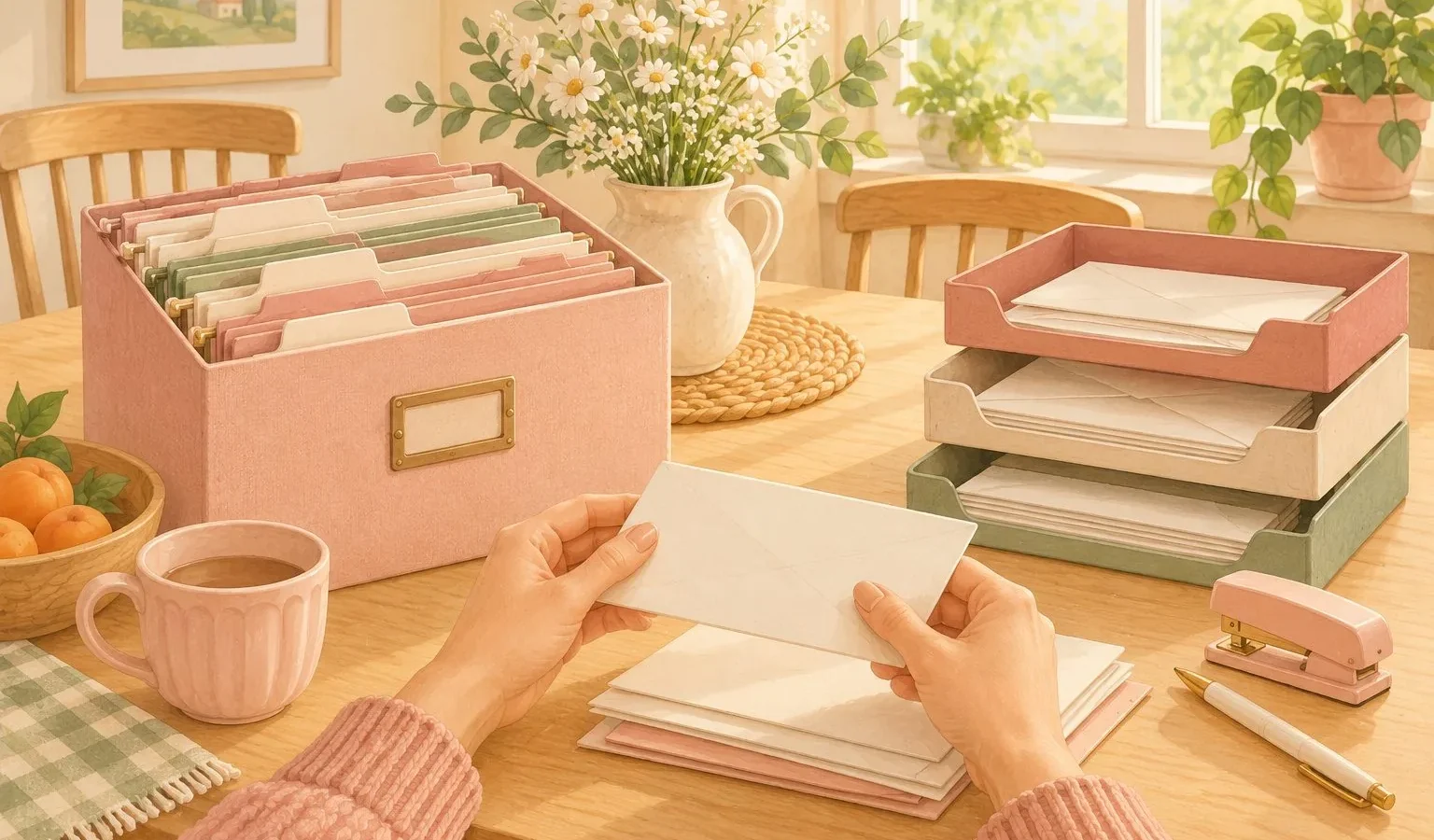
Organize home paperwork with three parts: an inbox for new papers, a small set of action folders (to do, to pay, to file) and a simple filing system for what you keep. Store irreplaceable originals like birth certificates, passports, Social Security cards, deeds and car titles in a fireproof, waterproof box or safe, and keep digital copies somewhere secure. Recycle or shred what you no longer need.
Paperwork is the household chore nobody wants to talk about. It does not look dramatic, but it creates a constant background worry: did I pay that bill, where is the warranty for the dishwasher, what happened to the kids’ immunization records?
The fix is not a perfect filing cabinet. It is a simple system with a clear next step for every piece of paper, plus a safe place for the few documents that would be hard to replace. You can set it up in a handful of 20-minute sessions.
This guide is part of Home Office Organization: A 20-Minute Reset Plan. If kids’ papers are your biggest problem, see How to Organize Kids’ Papers and Keepsakes.
Part 1: The inbox
All new paper goes into one inbox. Mail, receipts, forms, statements, anything. The point is to stop paper from landing on counters, tables and the top of the fridge.
Pick a spot near where mail comes in. A tray, a basket or a wall file all work. The only rule is that every new paper goes there.
Part 2: Action folders
Once or twice a week, empty the inbox. Each paper gets one of these outcomes:
- Recycle or shred: junk mail, envelopes, flyers, anything you do not need.
- To do: forms to fill in, things to sign, calls to make.
- To pay: bills that are not on autopay.
- To file: papers to keep once they are handled.
Keep these as three labeled folders in a desktop file holder or the front of a drawer. Most papers move through in a week.
Part 3: The filing system
The documents you keep go into a simple system. A small file box or one filing drawer is enough for most families.
Suggested categories
Start with broad categories and add sub-folders only when a category gets crowded.
- Home: lease or mortgage documents, homeowner’s or renter’s insurance, home improvement receipts
- Auto: registration, insurance, maintenance records, loan documents
- Financial: bank statements you need to keep, investment statements, retirement accounts
- Taxes: one folder per year with returns and supporting documents
- Medical: records, immunizations, insurance cards and explanation of benefits forms
- Insurance: life, disability and other policies
- Kids: one folder per child for school records, medical records and activity forms
- Warranties and manuals: for appliances and electronics
- Pets: vet records and vaccination certificates
Label folders clearly. If someone else in the house needed to find the car insurance, they should be able to.
What to keep and for how long
Rules vary by situation, so check with a tax professional or the agency involved if you are unsure. These are common guidelines:
| Document | How long to keep |
|---|---|
| Birth and death certificates, marriage and divorce papers, adoption papers | Permanently |
| Social Security cards, passports | Permanently (update as needed) |
| Property deeds and car titles | As long as you own the property or vehicle |
| Wills, powers of attorney, estate documents | Permanently, updated as needed |
| Tax returns and supporting documents | At least 3 years; many people keep 7 |
| Home improvement receipts | As long as you own the home, plus 3 years |
| Bank and credit card statements | 1 year, unless needed for taxes |
| Pay stubs | Until you check them against your annual W-2 |
| Utility bills | Until the next bill arrives, unless needed for taxes |
| Medical bills | 1 year after payment, longer if needed for taxes or insurance disputes |
| Warranties and manuals | As long as you own the item |
The IRS says to keep records for at least three years in most cases, and longer in some situations, such as six years if you underreport income by more than 25% or seven years if you claim a loss from worthless securities. You can read the full guidance on the IRS website.
Keeping important documents safe
Some papers are hard or slow to replace. These deserve extra protection.
What belongs in a safe place
- Birth certificates
- Social Security cards
- Passports
- Marriage certificates and divorce decrees
- Property deeds and car titles
- Wills and powers of attorney
- Adoption and custody papers
- Military records
Where to keep them
- A fireproof and waterproof document box or safe at home. Look for a fire rating and a water rating.
- A bank safe deposit box for documents you rarely need. Keep in mind that it is only accessible during bank hours, so passports and anything you might need quickly may be better at home.
Make digital copies
Scan or photograph your important documents and store them securely, such as in an encrypted cloud account or on an encrypted drive. Digital copies do not replace originals, but they make replacing lost documents much easier.
Tell someone
Make sure a trusted person, like your partner or a family member, knows where your important documents are and how to get to them.
Shredding what you no longer need
Anything with personal information such as account numbers, Social Security numbers or medical details should be shredded rather than recycled. A small home shredder works for most families. Some communities also hold free shredding events.
The 20-minute setup plan
You can set up the whole system in about five short sessions:
- Session 1: Set up the inbox and the three action folders.
- Session 2: Gather all loose paper in the house into one box.
- Session 3: Sort the box into recycle, shred, action folders and file.
- Session 4: Set up the filing categories and file the keepers.
- Session 5: Gather important originals into a fireproof box and scan copies.
After that, a weekly 10-minute session to empty the inbox keeps everything moving.
Going paperless where it makes sense
You can cut incoming paper significantly by:
- Switching bills and bank statements to electronic delivery
- Unsubscribing from catalogs
- Scanning receipts you need for taxes or returns
- Opting out of prescreened credit offers at optoutprescreen.com, the official site for the major credit bureaus
Related guides
- Small Home Office Organization Ideas
- Desk Organization Ideas for Small Spaces
Organizing digital documents
Paper is only half the problem. Digital files, statements and photos of receipts need a system too.
Create a simple folder structure
Mirror your paper categories in your computer or cloud storage: Home, Auto, Financial, Taxes, Medical, Insurance, Kids, Warranties. Inside Taxes, one folder per year.
Name files clearly
Use a consistent format that sorts well, like “2026-03 Car Insurance Renewal” or “2025 Tax Return.” It makes searching easy.
Back up important files
Keep important digital documents in at least two places, such as a secure cloud account and an encrypted external drive.
Protect sensitive files
Use strong, unique passwords and turn on two-factor authentication for accounts that hold important documents.
A household information binder
Many families keep a simple binder or secure digital document with the information someone would need in an emergency:
- Emergency contacts
- Doctors, dentists and pharmacy details
- Insurance policy numbers and contact details
- Account providers for utilities, internet and phone
- Where important documents are kept
- Pet care information and vet details
- Instructions for the household, like how to shut off the water
Keep it updated once a year and tell a trusted person where it is.
Paperwork for a side business
If you run a side business from home, keep its records separate:
- A separate folder or file box for business income and expenses
- Receipts for supplies, equipment and fees
- Records of payments received
- Any business registration or license documents
The IRS Gig Economy Tax Center explains what records self-employed people generally need to keep.
The annual paperwork purge
Once a year, maybe in January after tax documents start arriving, do a deeper review in two or three sessions:
- Shred bank and credit card statements older than a year unless needed for taxes.
- Move last year’s tax documents to an archive box.
- Check that warranties and manuals are for things you still own.
- Update the household information binder.
- Review insurance policies and note renewal dates on the calendar.
FAQ
What is the best way to organize important papers at home?
Use an inbox for new paper, three action folders (to do, to pay, to file) and a simple filing system by category. Store irreplaceable originals in a fireproof, waterproof box.
What documents should I keep in a fireproof safe?
Birth certificates, Social Security cards, passports, marriage and divorce papers, deeds, car titles, wills and powers of attorney.
How long should I keep tax returns?
The IRS generally recommends at least three years, and longer in certain situations. Many people keep returns and supporting documents for seven years to be safe.
Should I keep paper copies of bank statements?
Usually only if you need them for taxes or a specific purpose. Most banks keep statements available online for several years.