Short answer
Toddlers aged 2 to 3 can handle simple, one-step jobs: putting toys in a bin, carrying clothes to the hamper, wiping spills, feeding a pet with your help, watering plants, matching socks, putting books on a low shelf and carrying their plate to the counter. They love helping because it makes them feel capable and close to you. Keep each job short, show them how, and praise the effort rather than the result.
If you have a toddler, you already know they want to do whatever you are doing. Sweeping, stirring, wiping, carrying the groceries. That eagerness is a window, and it does not stay open forever. Kids who help at two usually keep helping at six. Kids who are shooed away at two often learn that housework is something that happens to them.
Toddler help is slow. The socks will not match perfectly. The water will end up on the floor as well as the plant. It is still worth it, and after a few weeks some of these jobs genuinely save you time.
This list is part of the bigger Chores for Kids by Age guide. Here we go deeper on the youngest helpers.
Why toddlers love helping
Toddlers are working hard to figure out how the world works and where they fit in it. A real job, done next to a parent, tells them three things at once: I can do things, I belong here, and the grown-ups trust me. That is why a two-year-old will happily carry one spoon to the drawer and then ask for another.
Helping also gives toddlers something they rarely get: a sense of control. So much of their day is decided for them. Choosing which towel to fold or which plant to water feels big.
Starting this young is not just a mom habit. The American Academy of Child and Adolescent Psychiatry lists tidying up toys and putting groceries away as chores for ages 2 to 3, and notes that chores can build self-esteem and a sense of responsibility.
22 chores for toddlers
In the kitchen
- Carry their plate and cup to the counter after meals. Use unbreakable dishes.
- Put spoons and forks in the dishwasher basket (not knives).
- Wipe the table with a damp cloth after dinner.
- Wash vegetables in a bowl of water at the sink.
- Tear lettuce for a salad.
- Stir cold ingredients like pancake batter or yogurt.
- Unpack light groceries like bread, boxes of pasta and bags of rice.
Around the house
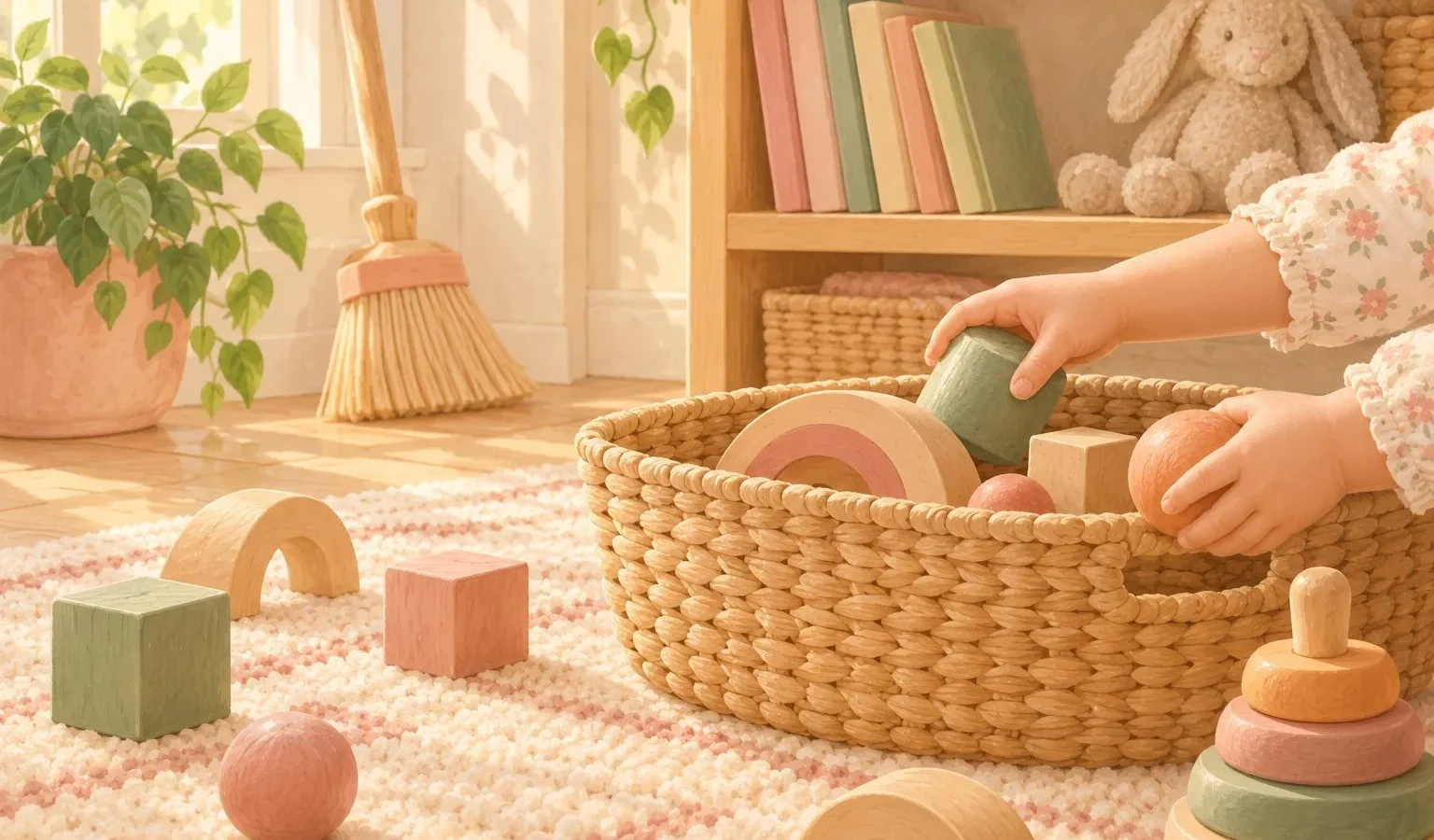
- Put toys in bins. Picture labels on the bins help them know where things go.
- Put books back on a low shelf.
- Wipe low windows or the glass of the oven door with a cloth and a spray bottle of water.
- Dust baseboards and low tables with a sock on their hand.
- Throw trash in the trash can.
- Water plants with a small watering can.
- Close cabinet doors and drawers left open.
Laundry
- Put dirty clothes in the hamper.
- Move clean clothes from the dryer to a basket.
- Match socks from a pile of clean laundry.
- Fold washcloths in half.
- Carry folded laundry to the right room.
Pets and outside
- Help feed the pet. You measure the food, they pour it into the bowl.
- Fill the pet’s water bowl with a small cup.
- Pick up sticks in the yard or put outdoor toys back in the bin.
How to set up chores for a toddler
Make it reachable
Toddlers can only help with what they can reach. A few small changes make a big difference:
- A sturdy step stool or learning tower in the kitchen
- Toy bins on the floor or the lowest shelf, with picture labels
- Unbreakable plates and cups in a low drawer they can open
- A small hamper in their room
- A hook at their height for their coat and bag
Keep it to one step
“Put the blocks in the blue bin” works. “Clean up your room” does not, because it is really fifteen steps. Break every job down to a single action and give one instruction at a time.
Show, then do it together
Toddlers learn by copying. Do the job slowly in front of them, then do it together, then let them try. Expect to do this many times.
Use the same time every day
Toddlers thrive on routine. Toys go in bins before bath. Plate goes to the counter after dinner. Clothes go in the hamper when pajamas go on. When a chore is attached to a routine, it stops being a request and becomes “what we do.”
Turn it into a game
- Beat the timer: set two minutes and see how many toys go in the bin.
- Color hunt: “Can you find all the red toys?”
- Clean-up song: the same song every time signals that it is tidy time.
- Sock puppets: matched socks get to say hello before they go in the drawer.
Praise the effort
Say what you saw: “You carried every book to the shelf.” Specific praise teaches them what they did well. Skip redoing their work while they are watching, even if the folding is lopsided.
Safety first
Toddlers should not handle anything sharp, hot, heavy or chemical. That means:
- No knives, glass or breakable dishes
- No cleaning sprays except plain water
- No jobs near the stove or oven while it is on
- No lifting anything heavier than a bag of bread
- Always supervise jobs that involve water
A spray bottle filled with plain water and a microfiber cloth gives toddlers a real cleaning job with no risk.
What if my toddler does not want to help?
Some days they will not, and that is fine. Toddlers have strong opinions and short attention spans. A few things help:
- Offer a choice: “Do you want to put away the cars or the blocks?”
- Join them: “Let’s do it together” works far better than “go do it.”
- Make it short: stop while it is still fun.
- Try again tomorrow: consistency over weeks matters more than any single day.
Building on toddler chores
As your child grows, these simple jobs turn into bigger ones. Matching socks becomes folding laundry. Carrying a plate becomes unloading the dishwasher. When they are ready for a structured routine, the Morning Routine for Kids checklist is a natural next step.
You can also find a printable chores-by-age chart in the free 20-Minute Home Reset Kit.
A sample toddler chore routine
Toddlers do best when chores are part of the day’s rhythm rather than separate tasks. Here is a simple day that includes six small jobs without feeling like work:
| Time | Chore |
|---|---|
| Morning | Put pajamas in the hamper |
| Breakfast | Carry cup to the counter |
| Before going out | Put shoes back on the rack |
| Lunch | Wipe the table with a damp cloth |
| Afternoon | Help feed the pet |
| Before bath | Toys in bins with the clean-up song |
That is six chances to help, each taking a minute or two. Over a week, it adds up to real habits.
Tools that make toddler chores easier
A few child-sized tools turn “helping” into actually helping:
- A small broom and dustpan set. They will not sweep well, but they will sweep happily.
- A spray bottle with plain water and a microfiber cloth.
- A small watering can.
- A kid-height hamper with no lid.
- Picture labels on toy bins and drawers.
- A small basket for carrying things from room to room.
- A learning tower or sturdy step stool for the kitchen.
You do not need all of them. Start with the spray bottle and cloth; it is the favorite in most houses.
Toddler chores by stage
Not all toddlers are the same. A rough guide:
Around 18 months to 2 years
- Put a toy in a bin when asked
- Carry a diaper to the trash
- Help put clothes in the washing machine
- Hand you items when unpacking groceries
Around 2 to 2 and a half
- Tidy toys with help
- Wipe a spill
- Put books on a shelf
- Carry their plate to the counter
Around 2 and a half to 3
- Tidy toys with fewer reminders
- Match socks
- Water plants
- Help set napkins on the table
- Put away their own shoes and coat
What toddler chores teach
The jobs are small, but what children learn is big:
- Independence: “I can do it myself.”
- Belonging: “I am part of this family.”
- Responsibility: “My things have a home.”
- Fine motor skills: pouring, wiping and folding all build hand strength and coordination.
- Following steps: a first taste of sequencing and memory.
These are the foundations that make bigger chores, and school routines, easier later.
FAQ
Can a 2-year-old really do chores?
Yes. Two-year-olds can do simple one-step jobs like putting toys in a bin, carrying clothes to the hamper and wiping a spill. The goal at this age is participation, not perfection.
How long should a toddler chore take?
Two to five minutes is plenty. Stop while they are still enjoying it.
Should I reward toddlers for chores?
Most toddlers do not need rewards. Your attention and specific praise are reward enough, and they keep helping feeling like part of family life rather than a transaction.
What chores are not safe for toddlers?
Anything involving knives, glass, heat, chemicals or heavy lifting. Stick to plain water for cleaning jobs and always supervise around water.