Short answer
The best way to organize canned goods is to make every label visible and rotate stock so older cans get used first. Use tiered risers or a gravity-fed can rack, group cans by type (beans, tomatoes, vegetables, soup, fish), load new cans at the back or top, and check dates every few months. USDA guidance is that high-acid canned foods keep best quality for 12 to 18 months and low-acid foods for 2 to 5 years.
The can shelf is the one that gets out of hand first in most pantries, including mine. Cans are heavy, they all look alike from above, and they stack in a way that hides everything except the front row. So you buy black beans because you cannot see that you already have three.
This guide fixes that shelf in one or two 20-minute sessions. If your whole pantry needs work, start with Pantry Organization: How to Organize Your Pantry in 20-Minute Sessions and use this page when you reach the cans.
Step 1: Take stock (one 20-minute session)
Pull every can off the shelf and onto the counter. As you go:
- Check dates. Most cans carry a “best by” date. That date is about quality, not safety, but very old cans are worth using soon or replacing.
- Look for damage. Throw away cans that are bulging, leaking, deeply dented along a seam, or rusted badly enough that the metal is pitted. Those are the signs USDA says to treat as unsafe.
- Group by type. Beans together, tomatoes together, vegetables, soups, fruit, fish and meat.
Count what you have in each group. Most families find a surprise or two here, like eight cans of corn and no tomatoes.
Step 2: Choose a storage method that shows every label
The single most important thing is visibility. If you can see a can, you will use it. If you cannot, you will buy it again.
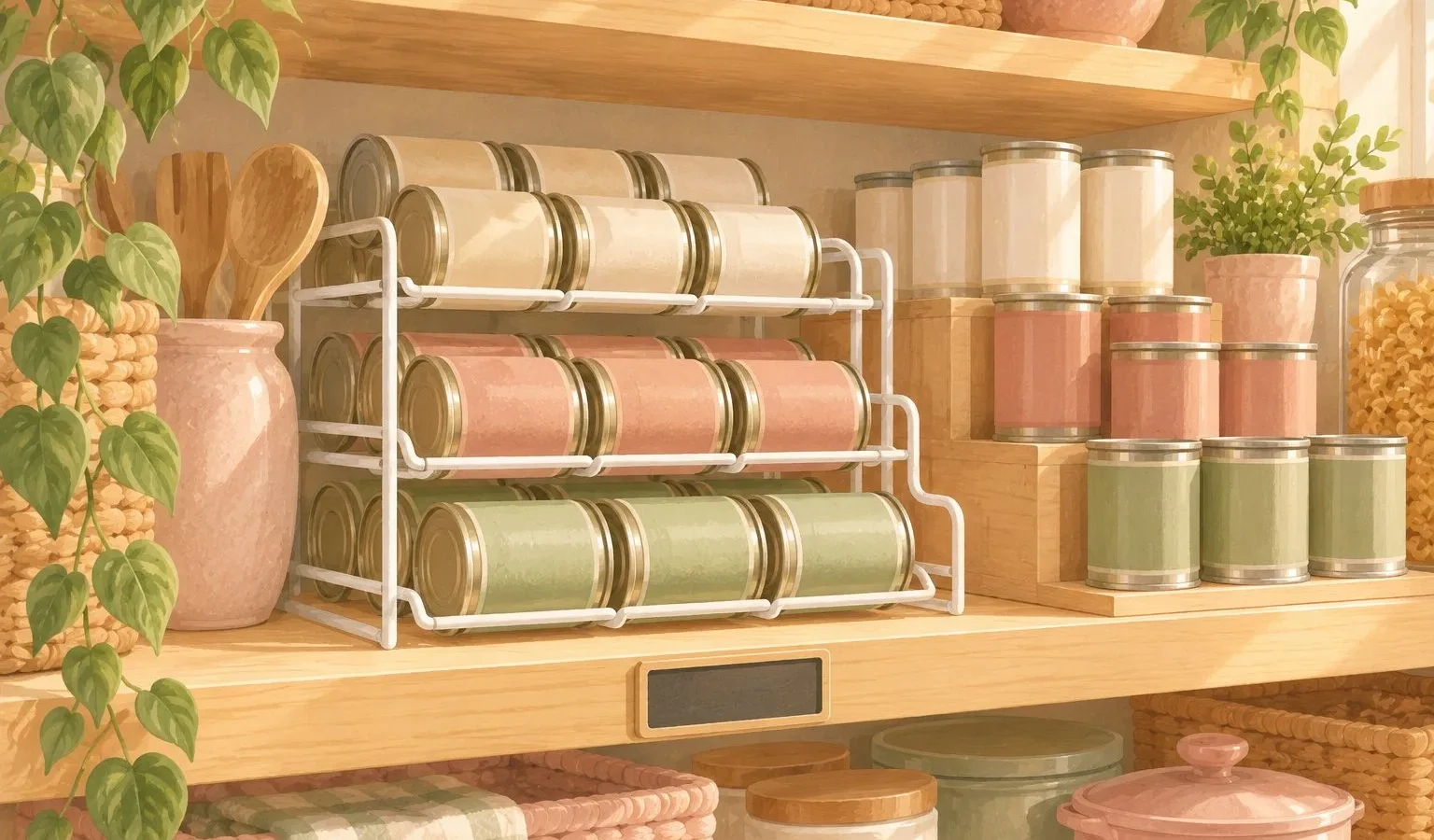
Tiered risers
Shelf risers with two or three steps let you see every row at once. They are cheap, adjustable and work on almost any shelf depth. This is the best starting point for most pantries.
Gravity-fed can racks
These racks hold cans on their sides on sloped tracks. You load from the top and take from the bottom, so the oldest can always rolls to the front. They are excellent if you buy in bulk and want rotation to happen without thinking.
The catch is size: measure your shelf height before you buy, because many racks are taller than they look.
Can dispensers in a drawer
If your kitchen has deep drawers, standing cans upright with the label facing up works well. You look down into the drawer and see everything at once.
Lazy Susan for odd sizes
Small cans of tomato paste, chipotle peppers and evaporated milk get lost easily. A turntable in a corner keeps them together.
Step 3: Set up first in, first out
Rotation is what keeps canned food from aging quietly at the back.
- When you unpack groceries, put new cans behind or above the existing ones.
- Pull from the front or bottom when you cook.
- If you use a gravity rack, load at the top and take from the bottom.
It sounds fussy, but after the first week it becomes automatic, and it means you rarely find an expired can again.
Step 4: Label the zones
Put a simple label on the shelf edge or riser for each group: beans, tomatoes, vegetables, soup, fish. When someone else unpacks the shopping, the labels tell them where each can goes.
How long do canned goods last?
According to the USDA Food Safety and Inspection Service, canned foods are safe indefinitely as long as the can is in good condition, but quality declines over time. Their guidance for best quality is:
| Type of canned food | Examples | Best quality within |
|---|---|---|
| High-acid | Tomatoes, fruit, juices, pickles | 12 to 18 months |
| Low-acid | Beans, vegetables, soups, meat, fish | 2 to 5 years |
Store cans somewhere cool and dry. Heat and humidity shorten their life, so the cupboard above the stove or a damp garage is not ideal.
How many cans should you keep?
There is no right number, but a helpful rule is to keep about two weeks’ worth of what your family actually eats. That covers a missed shopping trip or a sick week without filling the pantry with cans nobody wants.
Keep a short list of your “always” cans on the inside of the pantry door, and add to the grocery list when you open the last one in each group.
Common can organization mistakes
Stacking cans more than two high. The bottom ones become invisible and the stack falls over when you pull one out.
Mixing cans with jars and boxes. Cans need their own zone to stay organized.
Buying a rack before measuring. Can racks need depth and height. Measure twice.
Keeping cans you will not use. If nobody has eaten the cream of celery soup in a year, donate it while it is still in date.
Keep going
Once the cans are sorted, the 20 Pantry Organization Ideas That Actually Last cover the rest of the shelves, and Baking Supplies Organization handles the zone right next to them in most pantries.
Can storage for small spaces
If your pantry is small or you have no pantry at all, cans still need a system.
- Under-shelf baskets slide onto an existing shelf and add a layer for small cans.
- A narrow rolling cart fits between the fridge and the wall and holds a surprising number of cans on its side.
- A deep drawer with cans standing upright, labels up, works well in kitchens with drawer bases.
- A shoe organizer with clear pockets on the back of a door holds small cans of tomato paste and tuna.
Whatever you choose, the rules are the same: one zone for cans, labels visible, oldest at the front.
Stocking up without overbuying
Sales on canned goods are a real opportunity, but only if the cans get eaten. A few habits help:
- Buy only what you already use. A great price on something nobody likes is not a saving.
- Write the date of purchase on bulk cans with a marker on the lid, so rotation is easy.
- Keep bulk stock separate on a higher shelf or in a bin, and refill the everyday zone from it.
- Check the shelf before you shop. Two minutes of looking saves buying the fourth can of corn.
Meals that use up canned goods
The best way to keep the can shelf moving is to cook from it every week. A few easy dinners:
- Black bean quesadillas with canned beans, salsa and cheese.
- Tuna pasta with canned tuna, lemon, olive oil and peas.
- Quick tomato soup with canned tomatoes, broth and a splash of cream.
- Chickpea curry with canned chickpeas, coconut milk and curry paste.
- Chili with canned beans and tomatoes.
More ideas are in Quick and Easy Dinner Ideas Ready in 20 Minutes, and planning one pantry dinner each week in your weekly meal plan keeps the shelf rotating naturally.
Donating cans the right way
If you find cans you will not use, food banks are usually happy to take them. Most ask that donations are in date, unopened and undamaged. Check with your local food bank for their current needs; many have a list of the items they need most.
FAQ
Is it safe to eat canned food past the best-by date?
USDA says canned food in good condition remains safe, but taste, texture and nutrients can decline after the best-quality window. Discard cans that are bulging, leaking, badly dented or rusted.
Should cans be stored on their side?
Either way works for safety. Storing on the side in a gravity rack makes rotation automatic, while upright storage with labels forward is easier on standard shelves.
What is the best can organizer for a deep pantry?
Gravity-fed racks make the best use of deep shelves because cans roll forward. Tiered risers work better on shallow shelves.